
Downey City Directory Collections
Downey directory evidence is spread across the Los Angeles County Library Californiana holdings, genealogy catalogs, telephone volumes, and local archival material. The shelf list is strongest when treated as a set of dated snapshots rather than one continuous roll. Haines volumes provide reverse address research, while business and yellow-page books answer narrower questions about listed firms. A cataloged edition may require a library license, an account, or an in-person visit, so catalog presence does not prove free home viewing.
| Collection | Years | Where Held | Access |
|---|---|---|---|
| Business Directory | 1950 | LA County Library Californiana | Onsite inquiry |
| Los Angeles Greater Business Directory | 1952 | LA County Library Californiana | Onsite inquiry |
| Haines Los Angeles South Suburban Cross-Cross | 1981, 1983-86, 1988 | LA County Library Californiana | In person |
| Haines LA County South Central Cross-Cross | 1989-92 | LA County Library Californiana | In person |
| GTE Downey and nearby address directories | May/Nov 1988; May 1989; May 1990; Nov 1991; May 1992 | LA County Library Californiana | In person |
| Pacific Bell Midcities | Aug 1988; Feb 1989; Feb/Aug 1990; Aug 1992 | LA County Library Californiana | In person |
| Downey-Norwalk white and yellow pages | 2001, 2002-03, 2004-06, 2008; YP 2006 and later variants | LA County Library Californiana | Listed subscribers and businesses |
| Downey/Norwalk Area | 2008, 2009, 2015-16 | LA County Library Californiana | Regional volume |
| Downey-Norwalk YP | 2009-10 | LA County Library Californiana | Business-focused |
| Whittier WP/YP portions | 2004-10 | LA County Library Californiana | Cross-boundary coverage |
| Downey-South Gate YP | 2005-06 | LA County Library Californiana | Business-focused |
Known runs have gaps. They do not establish the first or last year that a Downey volume was ever published. A missing volume can reflect a holding gap, a regional title change, a listed-subscriber limit, or a break in publication. Record the exact title and edition before comparing names.
Note: A catalog record identifies an edition, not whether every scanned page can be viewed from home.
Downey's Californiana Shelf
The detailed year list belongs to LA County Library Californiana, while the Downey City Library is a useful local access point for catalog help and staff direction. The city library is at 11121 Brookshire Avenue and can be reached at 562-904-7360. Published hours are Monday through Thursday 10 a.m. to 8 p.m. and Friday through Saturday 10 a.m. to 5 p.m.; it is closed Sunday. Verify hours before a research visit; public databases require a library card and PIN.
The Downey library site does not publish a detailed local-history room or a complete printed run. That limit matters. Staff and the catalog can point to available material, but the concrete year list above should not be expanded into an unsupported claim about a local shelf. A staff-assisted search is also a good way to distinguish a name-oriented volume from a reverse directory or a business-only yellow-page section.
Digitized catalog records identify Downey editions for 1948, 1950, 1952, 1953, 1955, 1957-58, 1959, 1961, 1963-65, and 1968. Library of Congress telephone volumes include 1980, 1981, and 1987-88. Viewing may require a FamilySearch or Ancestry account or a library license; catalog presence is not proof of free home viewing.
The Downey City Library research entry point shows where a local reader can begin checking catalogs, services, and current access rules.
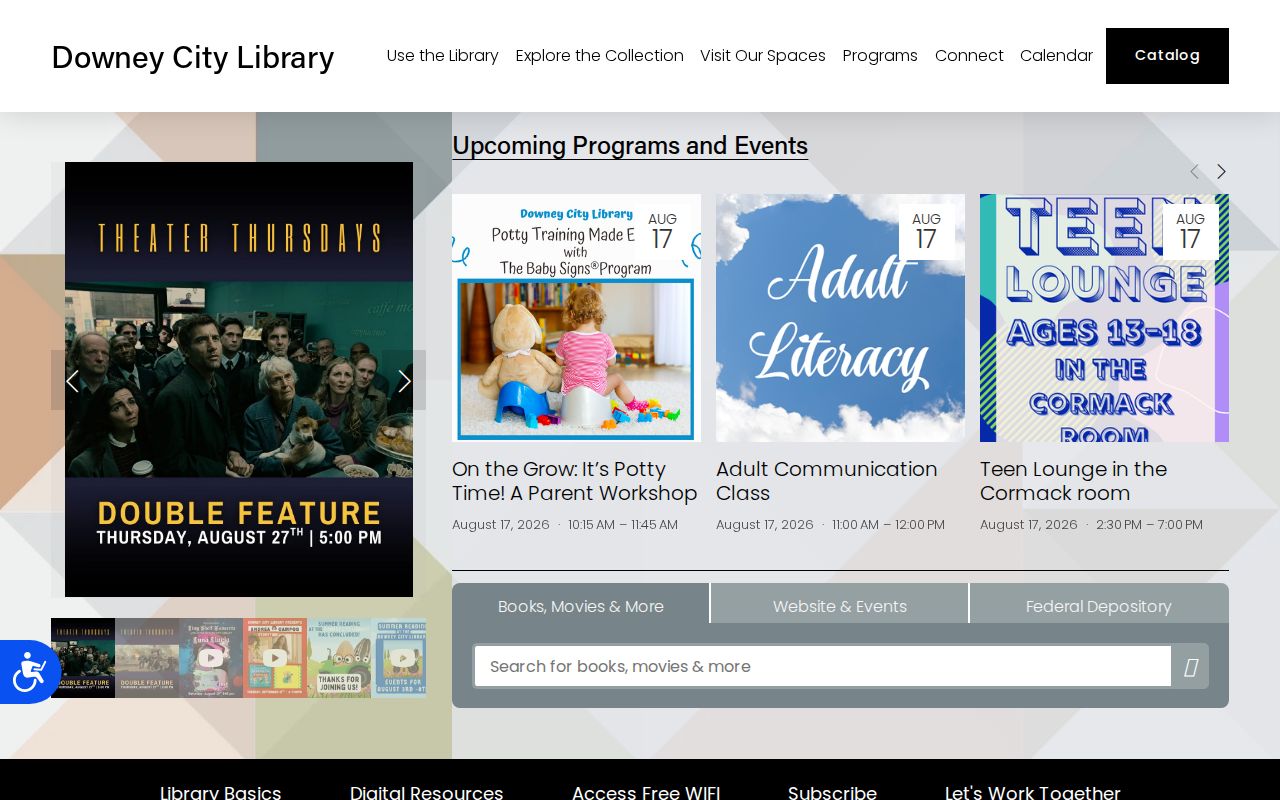
Use the library as a route to the right catalog record, then confirm whether the volume is onsite, licensed, or held by another archive.
Downey City Directory Cross-Cross
A Haines cross-cross directory reverses the usual name-first path. The researcher starts with a street and number, then checks the listed occupant or telephone entry. Downey's Haines Los Angeles South Suburban holdings cover 1981, 1983-86, and 1988. The Haines LA County South Central run continues through 1989-92. GTE and Pacific Bell issues fill selected points in the same broad era, but none of these sets is a complete current resident roll.
Later Downey-Norwalk and regional books extend the printed trail into 2001-2016, with separate white-page, yellow-page, and business-focused titles. Whittier and Downey-South Gate volumes can matter near a regional boundary. Write down the title, date, page, street spelling, telephone, and unit exactly as printed. A gap may show only that a person was not listed in that edition.
The Downey library databases page is the source route for current authentication instructions and available research databases.
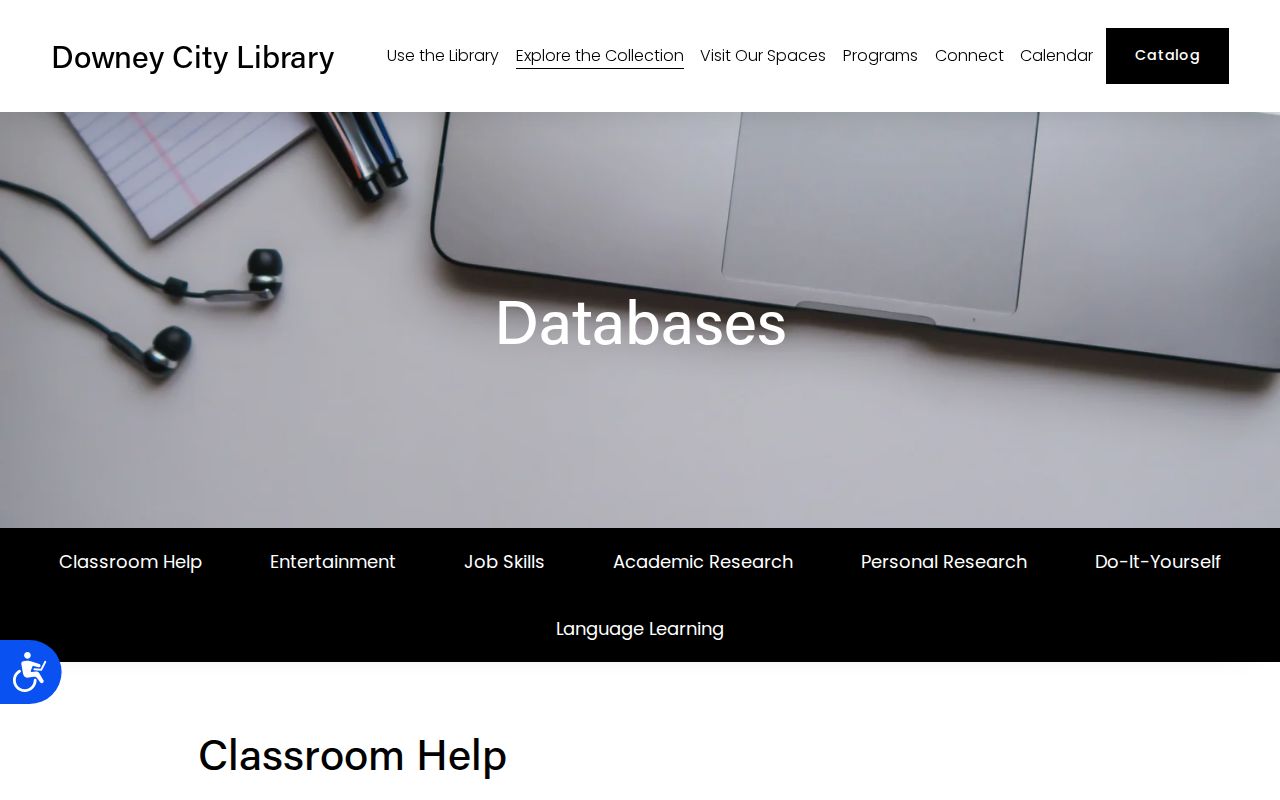
The database screen is an access checkpoint, not proof that a digitized directory is free or complete.
Downey City Directory Entry Clues
Read the page key before reading a line. Depending on the volume, an entry can combine a person's name, occupation, spouse or household link, street address, telephone exchange, and a mark for owner or renter status. Abbreviations may compress the address or describe a household role. The same mark can change meaning between publishers, so preserve the volume's own instructions.
- Criss-cross directory
- An address-order section that lets a researcher move from street and number toward a listed name or telephone entry.
- Householder index
- A name-based list of household heads or listed subscribers; it is not a complete list of every person at an address.
- Abbreviation key
- The publisher's explanation of short forms, symbols, exchanges, and address notes. Check it before interpreting a line.
- Publisher snapshot
- A dated compilation of listed or canvassed information, not an official current resident roll.
Occupation can help separate two people with similar names, but it is still a period clue. An owner or renter mark, when present, does not replace a deed. The safest reading keeps the printed role distinct from ownership, current occupancy, and later identity.
Read a 1959 Downey Entry
A checked 1959 Downey volume demonstrates how much information can fit in one short line. The entry names Sue Lang, gives the address as “7952 - 3d,” prints the telephone as “TO 1-6437,” places the residence in Downey, and links Sue Lang to spouse Frank R. Lang. The exchange-style telephone prefix is part of the historical record, not a modern number format.
| Name | Sue Lang |
|---|---|
| Occupation | Check the printed line and volume key; do not use it as an ownership test |
| Address | 7952 - 3d |
| Telephone | TO 1-6437 |
| Spouse | Frank R. Lang |
| Residence place | Downey |
| Owner or renter mark | Use only if the volume prints one; do not infer status |
| Research caution | Publisher snapshot, not an official current roll |
The sample supports a family-history lead, not a conclusion about current residence or title to a parcel. Compare the scanned page and abbreviation key through the cataloged 1959 entry source and the FamilySearch catalog record, then look for the same name in neighboring editions. A spouse link can help distinguish households, but it should still be checked against independent records.
Trace a Downey Household Across Years
Household research works best when each edition is treated as a bracket, not a move date. Start with an old address, standardize its historic spelling, and keep the original form beside the normalized one. For the 1981-92 period, use the Haines cross-cross volumes first, then bridge gaps with the GTE and Pacific Bell issues held by Californiana.
The National Archives census research page explains the federal census access route and the 72-year release rule.
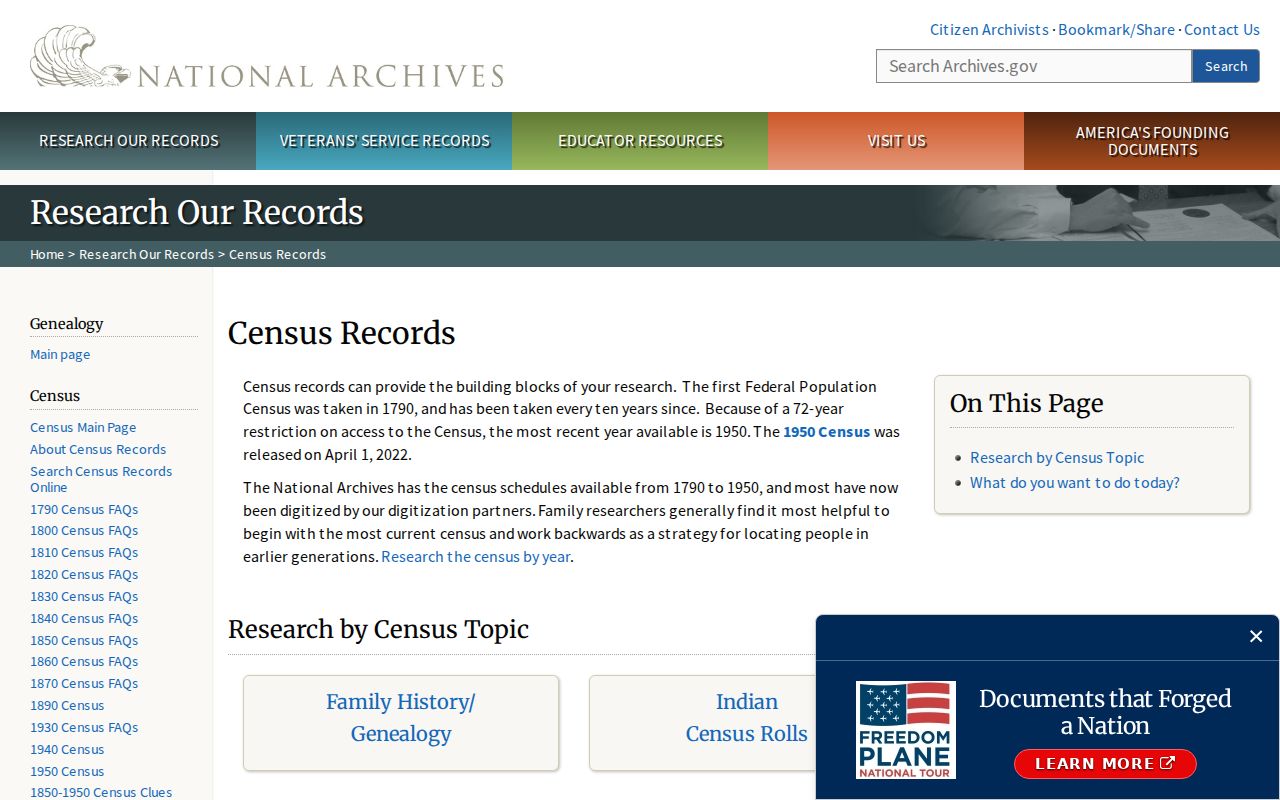
The census image belongs beside, not inside, the directory evidence: it can add household relationships while the directory supplies a separate publication date.
- Find the name in the first useful edition and copy the spelling, address, telephone, spouse, unit, and any mark.
- Follow the name forward, checking the reverse section and intervening GTE or Pacific Bell snapshots for address changes.
- Pair the 1948-68 directory editions with the 1950 census. The 1960 census is scheduled for public release in 2032, so its enumeration date differs from a directory date.
- Bridge occupant evidence to ownership with an assessor parcel, deed, or tax record. An occupant may be a renter, and a deed owner may live elsewhere.
- Use an obituary or cemetery source only as a secondary lead because exact local index runs were not verified in the official inventory.
When a name disappears, test three explanations: a move, death, or a non-listed household. A gap in the shelf or a changed regional title can look the same as a personal change.
Downey Historical Society Directory Memory
The Downey Historical Society finding aid describes a collection spanning 1846 to the present, with photographs, newspapers, city documents, maps, film, real-estate advertisements, books, and directories. Its named holdings include a 1957-58 Directory Blue Book/Downey City Directory and a 1930 Downey Sanborn map. The map shows building footprint and use, not residents, so it gains value when paired with a directory and deed.
The Downey History Center, at 12540 Rives Avenue, lists 562-862-2777 and downeyhistorycenter@gmail.com. Published access is Wednesday and Thursday from 10 a.m. to 2 p.m. and the third Saturday each month. Verify before visiting. The Library of Congress Sanborn collection also provides a route to digitized map material, including a February 1891 Downey sheet identified in the research.
The Historical Society finding aid image shows why a local archive can add context that a printed volume alone cannot supply.
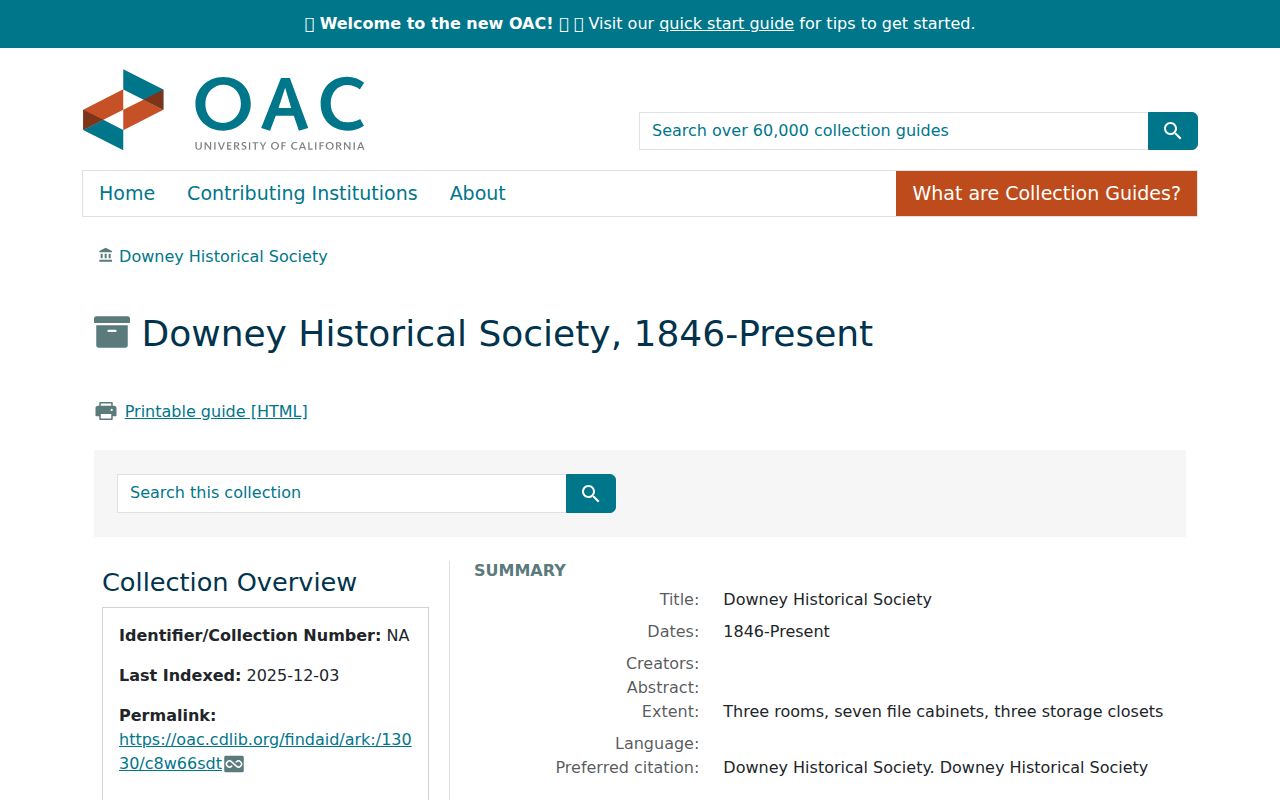
Use the archive to connect a printed name with civic documents, maps, or photographs, while keeping each source's limits clear.
Downey City Directory History
Downey became an incorporated city on December 17, 1956 and a charter city in 1965. Research before incorporation belongs in Los Angeles County, rancho, railroad, directory, and community archives rather than in a nonexistent earlier municipal series.
| 1846-present | Downey Historical Society collection span |
|---|---|
| 1948-1968 | Known Downey editions indexed by genealogy catalogs |
| 1957-58 | Directory Blue Book and Downey volume named in the Historical Society finding aid |
| 1981-1992 | Haines, GTE, and Pacific Bell reverse or telephone snapshots with gaps |
| 2001-2015/16 | Later Downey-Norwalk and Downey/Norwalk Area holdings |
These are known evidence points, not a claim about the first or last publication year. The printed record is most useful when its edition date, publisher, address form, and source location travel together.
A Critical Downey Directory Trail
Directory and deed research can reveal more than names. Downey's official land-use history documents 1939 HOLC grading and discriminatory restrictive covenants in Orange Estates that barred resale to Mexican American or Black purchasers. That history deserves careful context. A directory line may show who was listed, while a deed may show how exclusion shaped who could acquire property.
Use these records for family history and civic understanding, not to flatten a person or neighborhood into an old label. Compare dates, source type, and the language of the original document. A directory is one layer in the record trail, and its omissions can reflect publisher practice, privacy, or the unequal history of access itself.
Read the gap carefully. A missing name is not proof that a household was absent, and a listed name is not proof of ownership or present residence.